Kettleman Station Canopy Structural Design
Project: Kettleman Station Canopy
Architect: NJA Architecture
Firm of Record: JCWagner & Associates, Inc.
My Role: Structural Designer (under supervision of Doug Wagner, PE)
The Vision
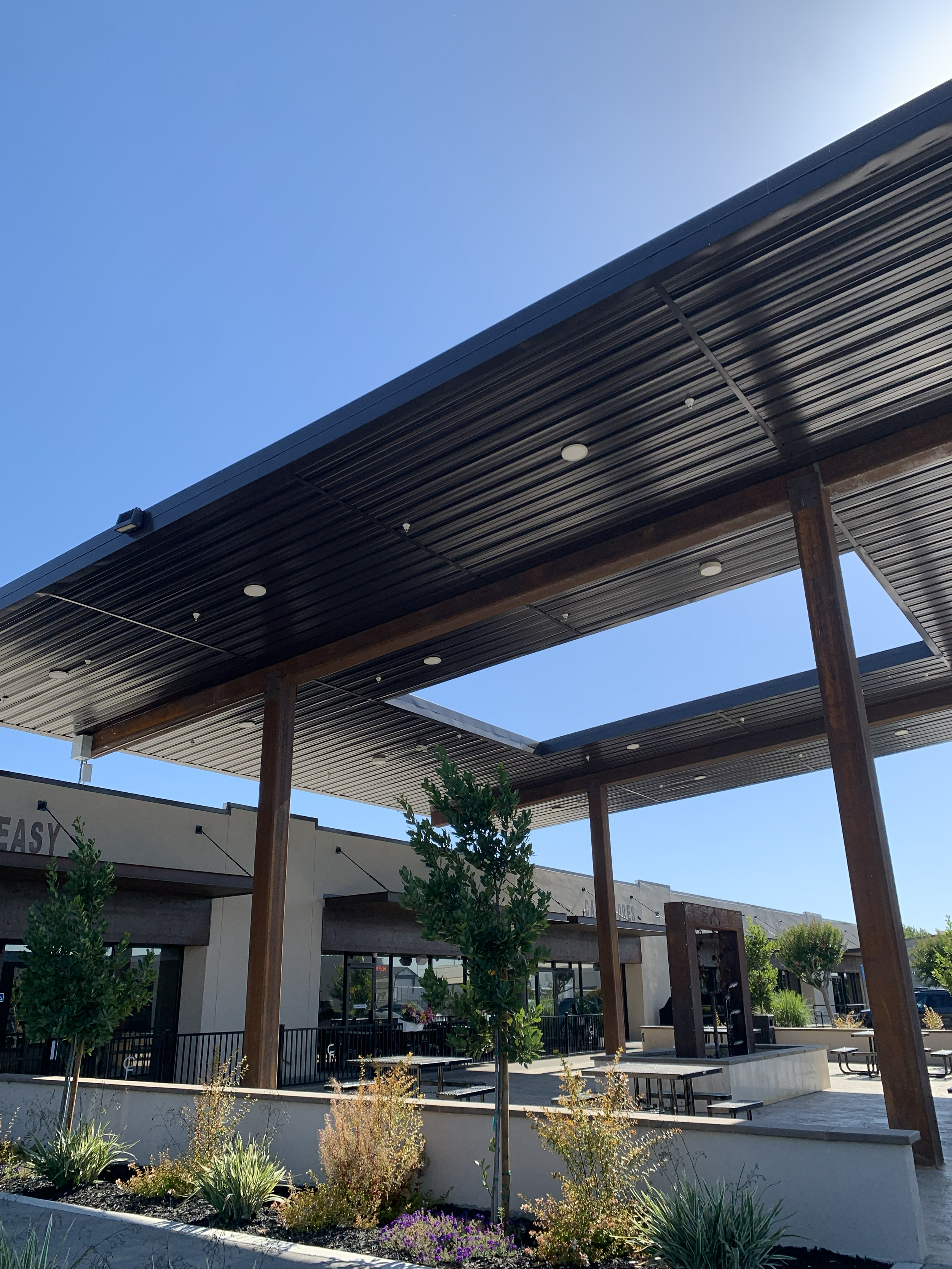
This commercial renovation aimed to modernize the exterior of an existing retail center. The architectural vision featured prominent custom metal awnings to create a distinct industrial aesthetic against the existing building. Additionally, the design called for a large, standalone steel shade structure with a central skylight to serve as an anchor for the new outdoor patio space.
The Challenge: Cantilevered Geometry & Retrofit Analysis
The design demanded a precise balance between structural performance and the architect's desired "floating" aesthetic, requiring careful analysis of both the new framing and the existing conditions.
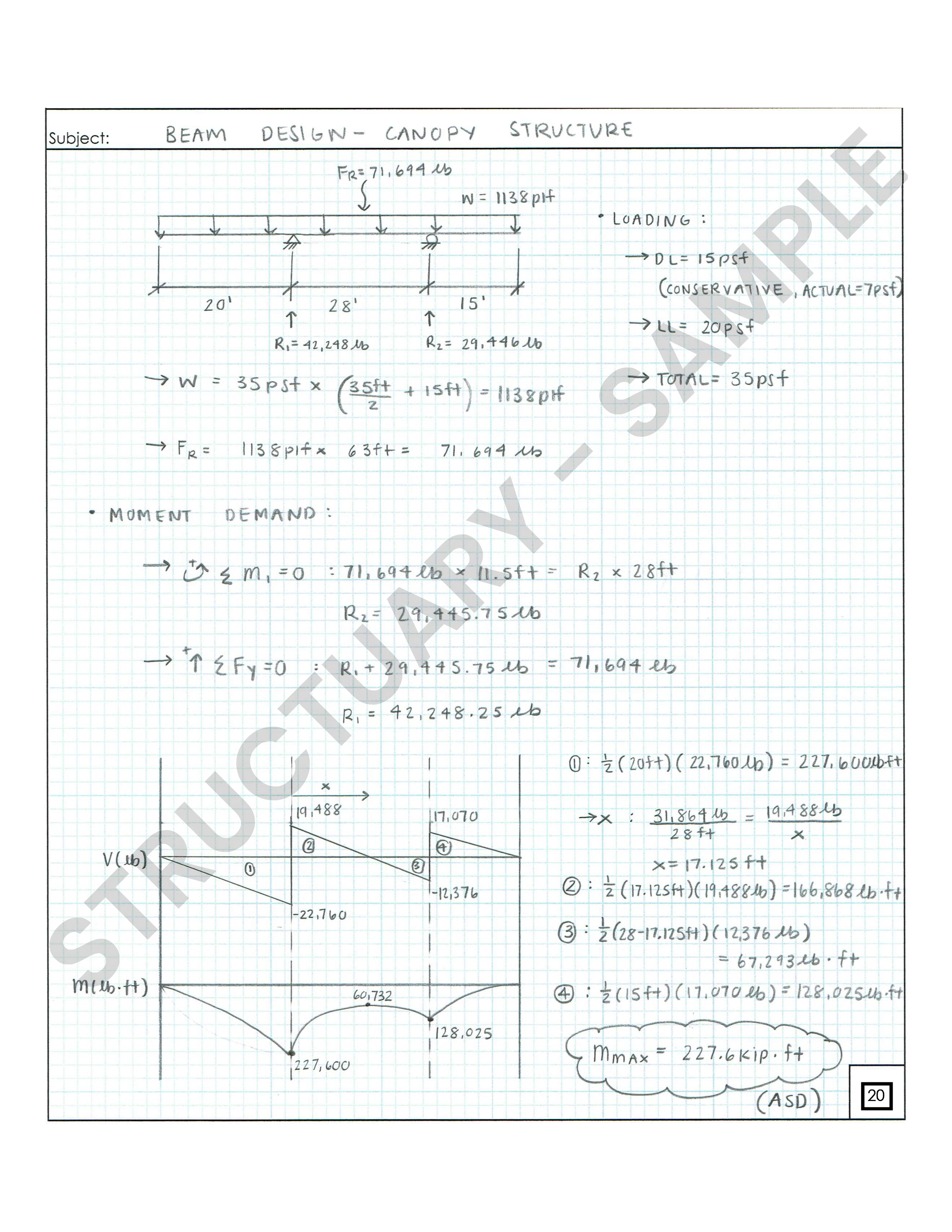
Controlling Deflection: The detached patio featured ambitious 15 and 20-foot overhangs. Managing the resulting moment forces was critical to preventing long-term deflection and maintaining the sleek, level profile essential to the design concept.
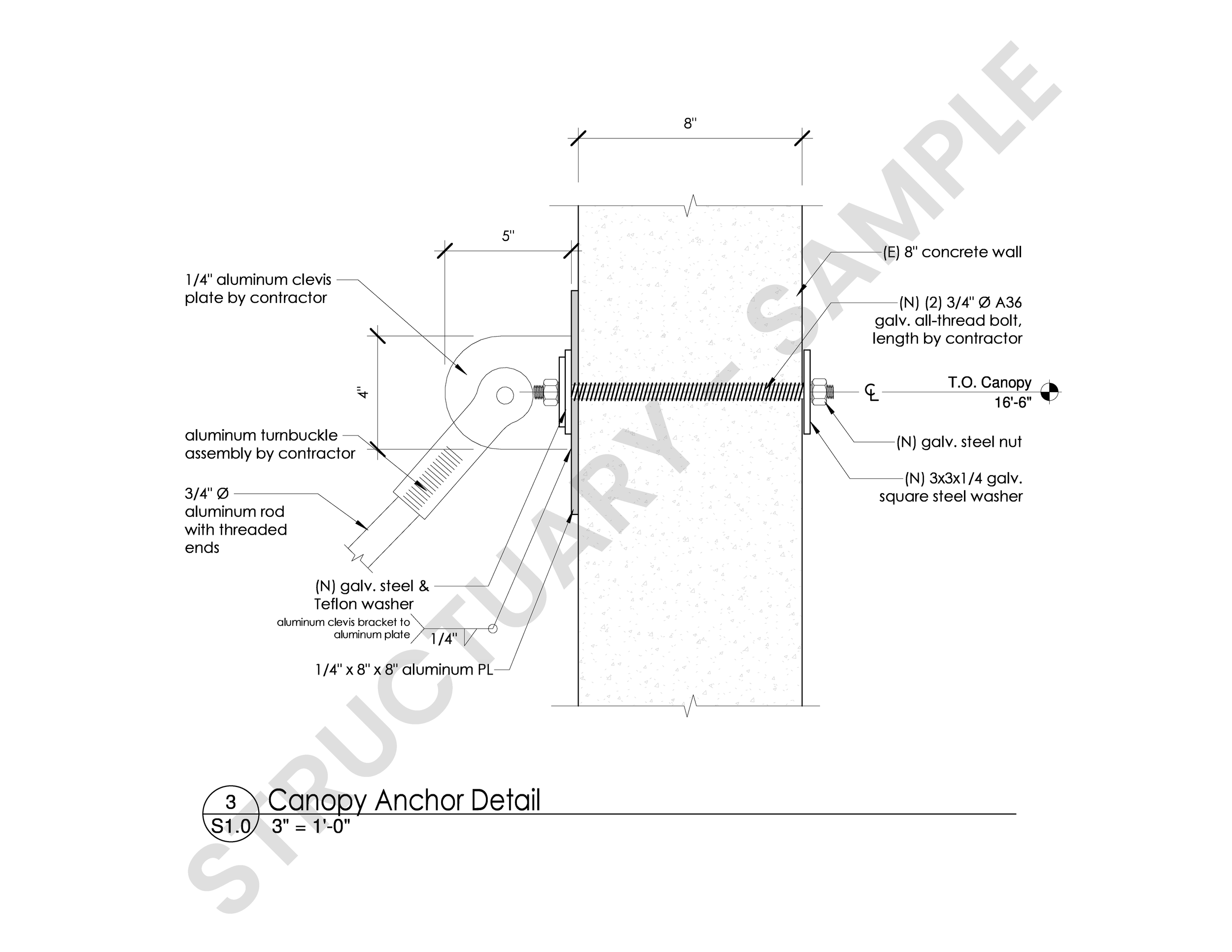
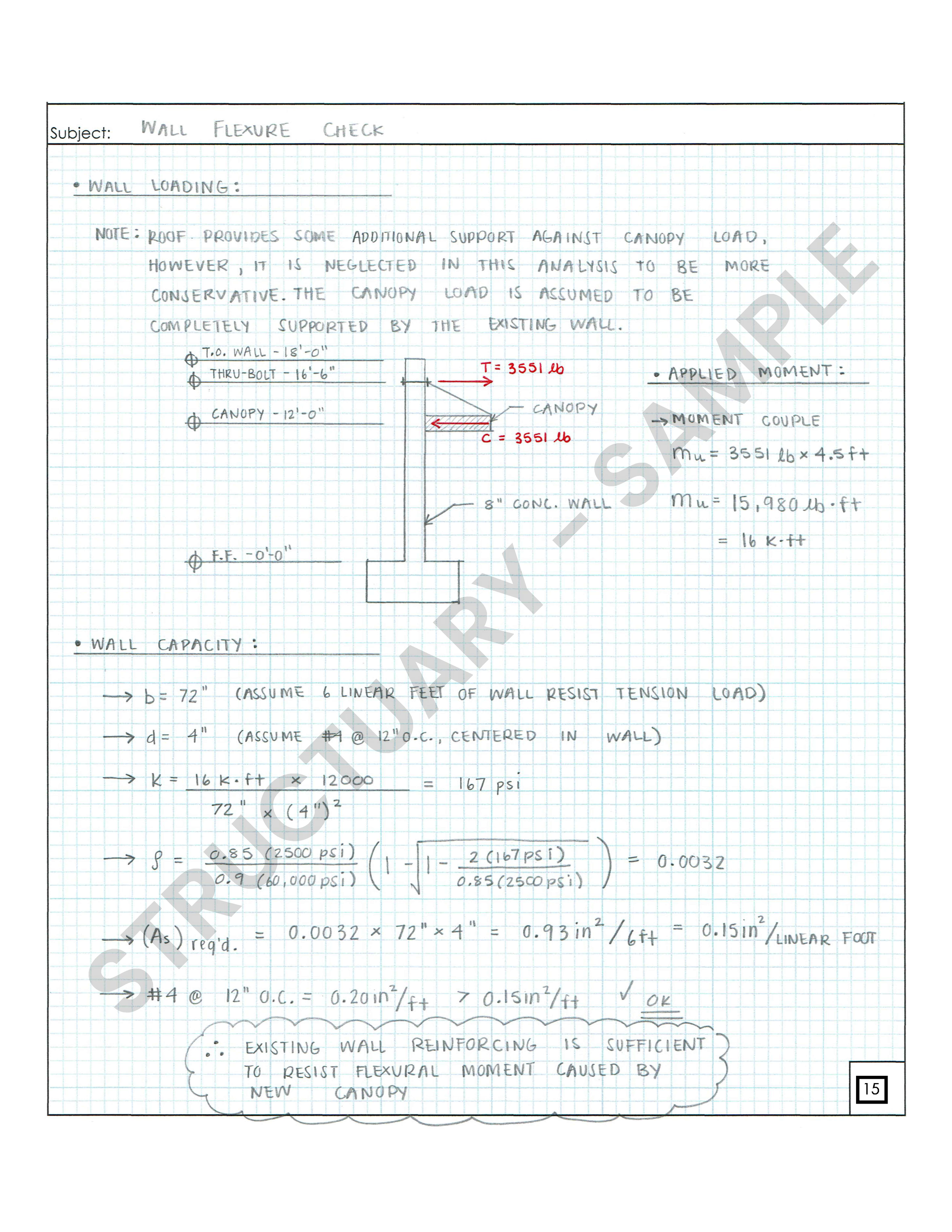
Existing Wall Verification: Anchoring the new steel awnings to the existing CMU shell required a detailed validation process. The original masonry walls had to be rigorously checked to ensure sufficient capacity for the new out-of-plane wind and eccentric gravity loads introduced by the add-ons.
The Engineering Solution
I managed the structural design and detailing for these exterior elements, coordinating with NJA Architecture to align the steel geometry with the updated facade.
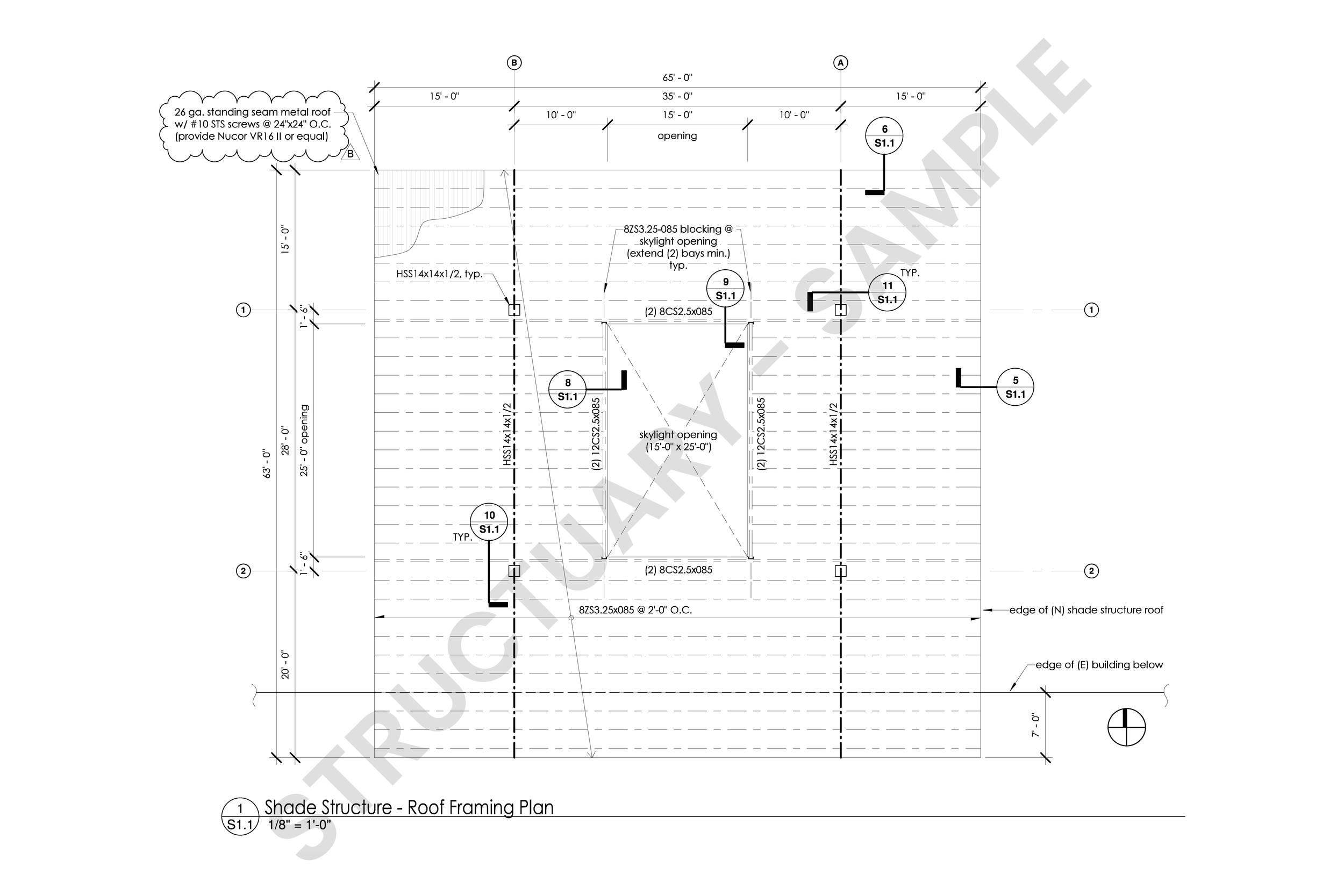
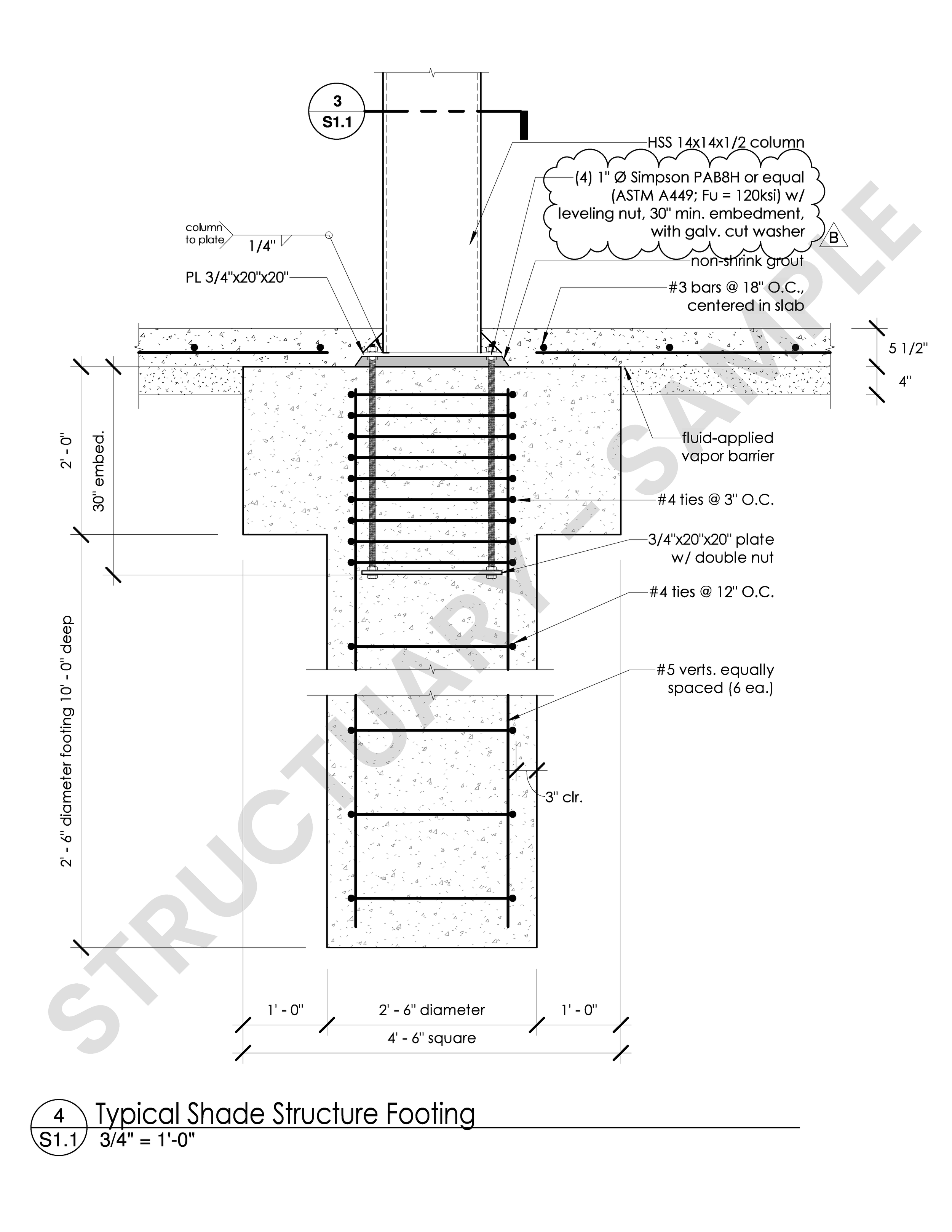
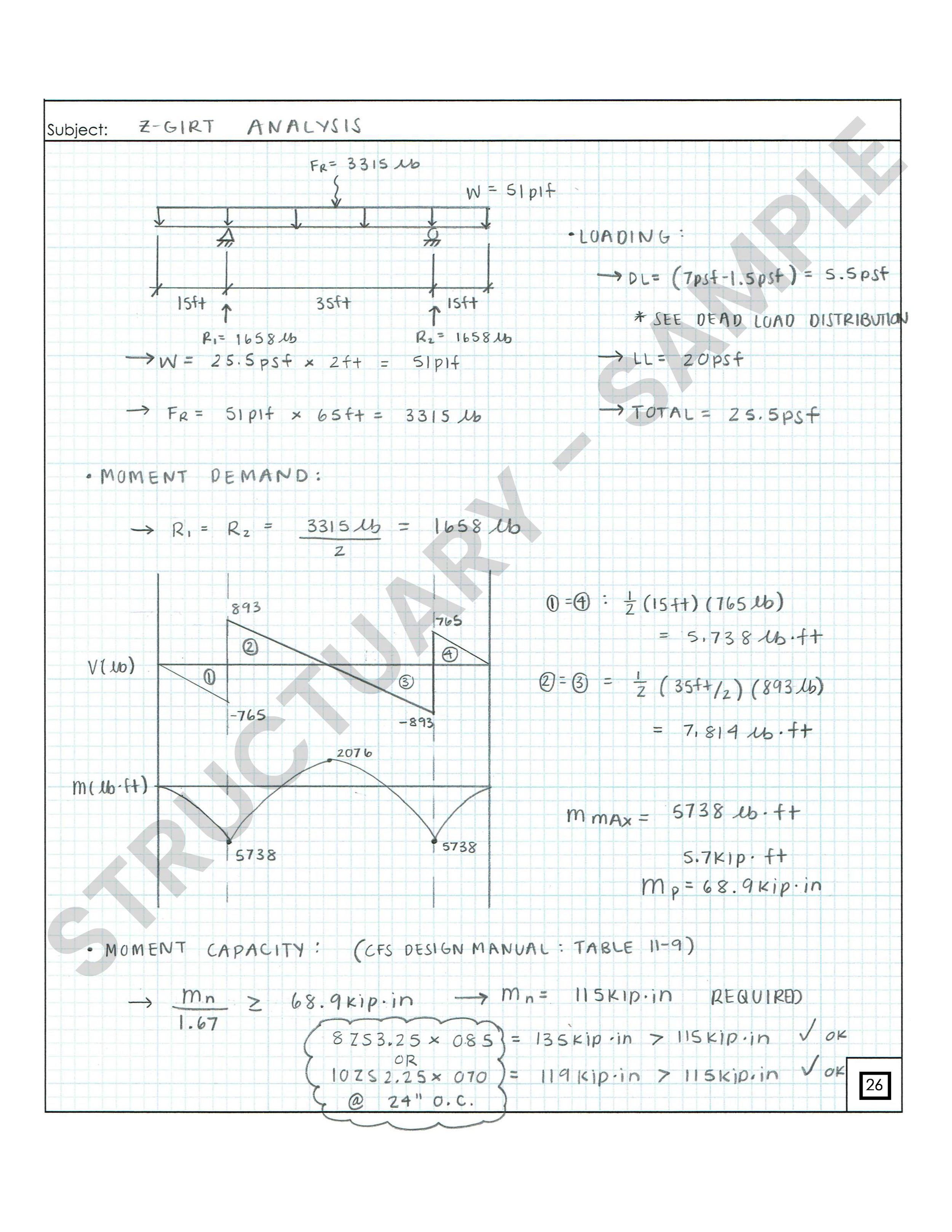
Canopy Framing System: For the detached patio, I designed a framing system utilizing Z-girts and HSS columns. To provide stability without cross-bracing that would clutter the open space, the columns were embedded into pole footings, creating a cantilevered system that maintained clean sightlines.
Diaphragm Analysis: I performed a rigorous analysis of the roof diaphragm, specifically accounting for the corrugated sheathing deck. This ensured that despite the large skylight opening, the remaining roof deck had sufficient shear capacity to transfer lateral seismic and wind loads safely to the vertical framing.
Facade Integration: For the building attached awnings, I detailed connections that transferred the wind loads safely into the existing CMU walls, validating that the legacy structure could support the modern architectural updates.